- 01Get explanations adapted to how you learn
- 02Practice the concepts behind your knowledge gaps
- 03Receive progressive hints in homework and quizzes
Every learner is different
Understand how every student learns.
Kognitv captures how each student studies, where understanding breaks down, and which support helps them move forward - then personalizes the learning experience and gives teachers a clear view of every knowledge gap.
- Individual learning patterns
- Personalized support
- Teacher-visible gaps

Knowledge gap identifiedSorted input is the missing condition
Explanation adaptedVisual comparison selected
Next check readyApply it to an unsorted list
See Kognitv in action
A learning system that adapts to the learner.
See a student ask a course question while the Learning Agent works beside an open document and guides the student toward an independent answer.
Built for learning and teaching
Personalized support for students. More time back for teachers.
01Plan schedules and coursework
02Create assignments and quizzes
03Grade work and draft feedback
04See student knowledge gaps
The Kognitv learning loop
Every interaction improves the next one.
Studying, assessment, teacher feedback, and independent performance continuously update one student-specific learning model. That model changes how Kognitv supports the learner next.
Study with the Learning Agent
Ask questions, review documents, get explanations, practice, and work through examples.
Capture learning evidence
Record structured signals from concepts, attempts, revisions, hints, timing, and help-seeking.
Quiz and test understanding
Use practice checks, quizzes, assignments, and exams to measure supported and independent performance.
Teacher evaluates
Create assessments, control permitted hints, grade submissions, and add expert feedback.
Update the learner model
Combine study evidence, assessment results, grading, and feedback into the student’s evolving profile.
Adapt the next interaction
Adjust explanation style, example choice, difficulty, practice sequence, and support depth.
Student-specific intelligence
Knowledge state
Knowledge gaps
Support response
Independence
The student experience
Personal help shaped by how this student learns.
Kognitv adapts explanations, questions, examples, practice, and support depth to the learner’s current understanding. It increases help gradually, then checks whether the student can apply the idea independently.
StudyExplainPracticeQuick
K
Learning AgentGrounded in your course
OnlineI understand that zinc loses electrons - but why does the reaction stop if we remove the wire?
You already have the oxidation step. The missing link is how electron flow and ion movement keep the whole cell electrically balanced. Let’s map both paths.
External circuit: carries electrons from zinc to copper. Salt bridge: moves ions to maintain charge balance. Break either path and the reaction cannot continue.
Your turn: the salt bridge is still present, but the wire is removed. What fails first - and why does the reaction then stop?
Electrons cannot reach the copper electrode. Charge starts building up in each half-cell, so oxidation and reduction can’t continue.
▣ Using approved course notes · 2 sources
For educators
Know where every learner is stuck - and what may help.
- 01Plan lessons and schedules
- 02Create assignments and quizzes
- 03Grade work and draft feedback
- 04Find knowledge gaps and plan support
One connected platform
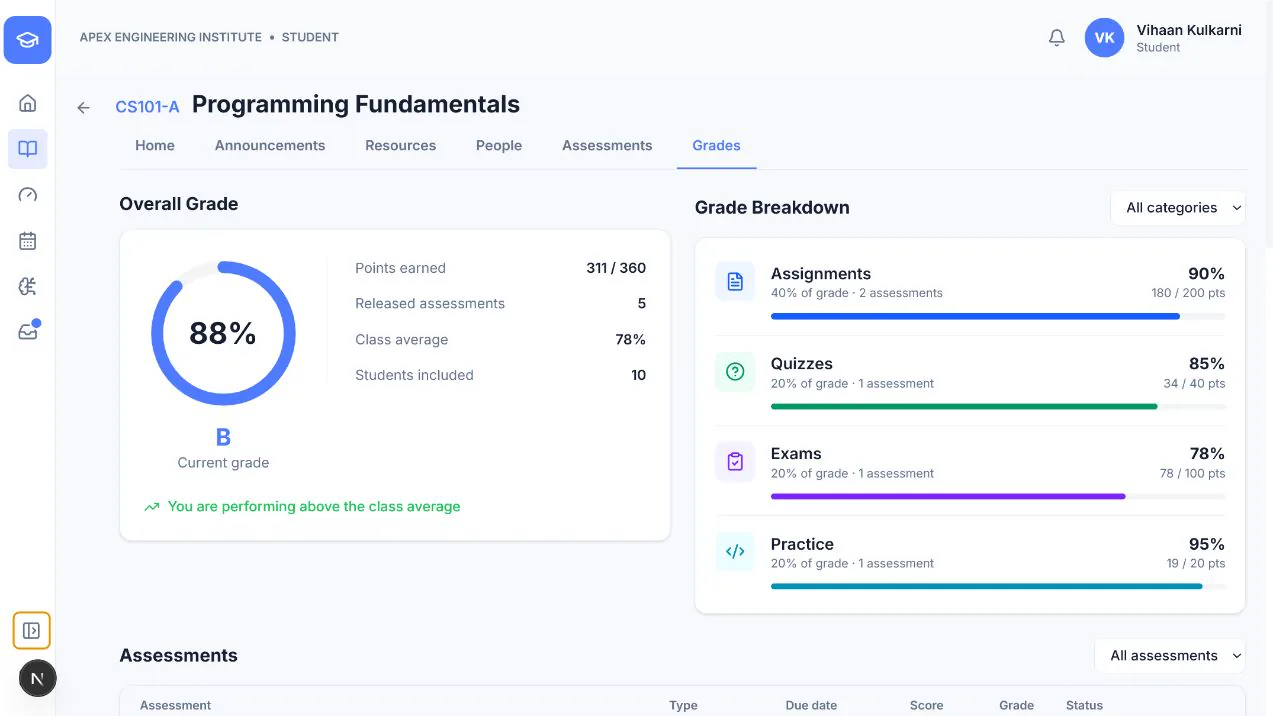
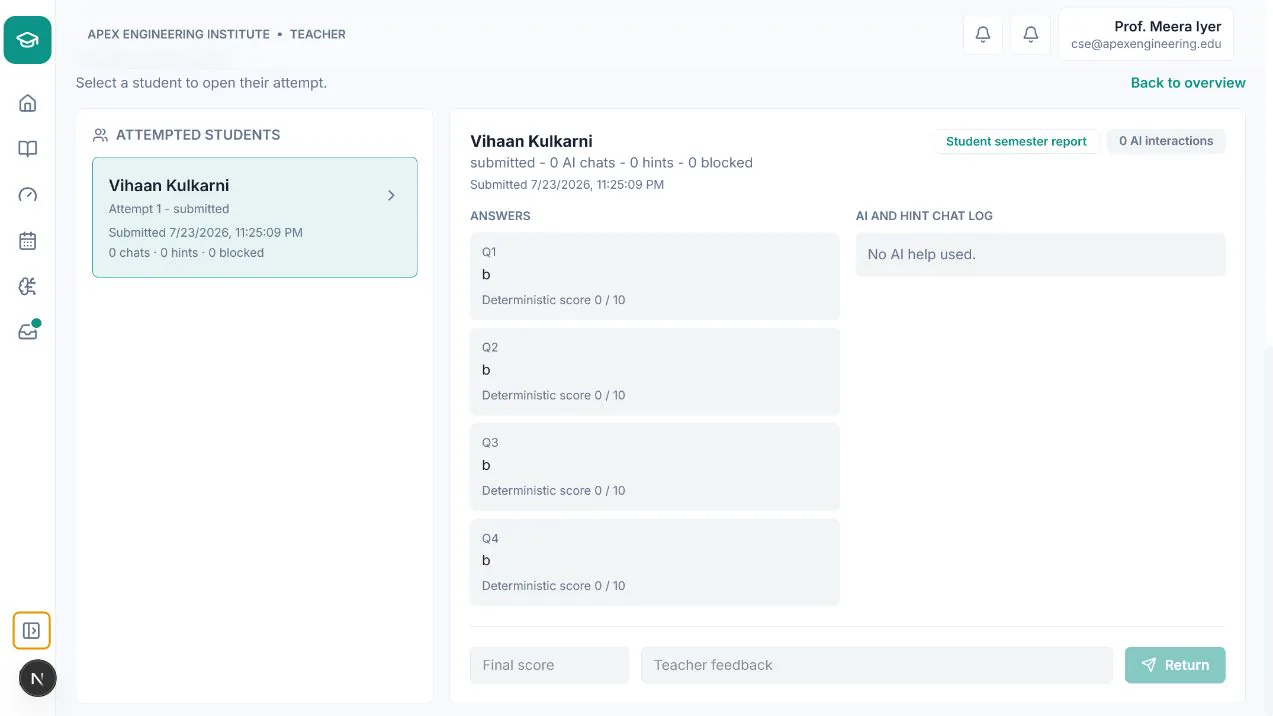
A focused workspace for every role.
Learning intelligence
See the student’s study patterns, knowledge gaps, help-seeking, independence, and progress - not only their final score.

Responsible by design
Personalized does not mean uncontrolled.
- 01Grounded in your curriculumKognitv works from the course materials and resources your institution approves.
- 02Teachers stay in controlEducators decide when AI can help, review its work, and adjust it before students use it.
- 03Clear, accountable supportSee what support was provided and the learning evidence behind each recommendation.
- 04Student privacy comes firstPersonalization uses learning signals while keeping raw answers and conversations within clear boundaries.
Start a conversation
See how Kognitv can support teachers and learners.
Explore personalized tutoring, clear learning insights, AI-assisted assessment creation, and practical tools for educators in one platform.